
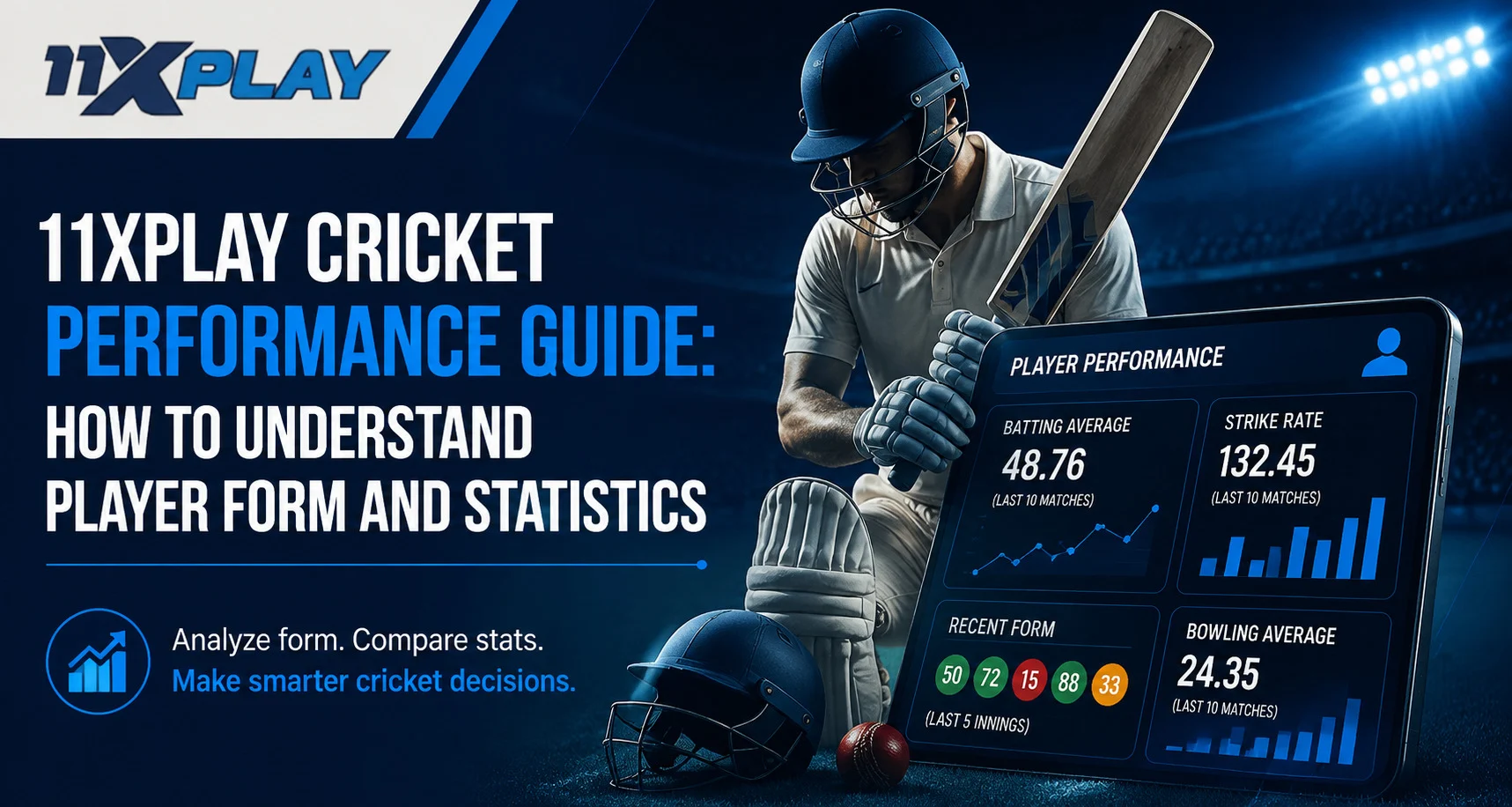
Why Player Performance Analysis Matters in Cricket
Modern cricket is heavily influenced by player statistics and performance trends. A player’s recent form, consistency, and match impact often provide important information about their current ability.
Understanding player performance helps cricket fans follow matches more closely and identify important factors that influence team results.
A detailed 11xplay cricket performance approach focuses on analysing different aspects of a player’s game rather than looking at only one statistic ,visit 11xplays online id.
Important Factors in Player Performance
Several factors help explain a player’s overall contribution:
- Recent match performances
- Batting consistency
- Strike rate
- Bowling economy
- Wicket-taking ability
- Fielding contribution
- Performance under pressure
These factors together provide a clearer picture of a player’s current form.
Understanding Batting Performance
Batting performance is not measured only by total runs.
Important batting statistics include:
Average
A batting average shows how consistently a player scores runs across innings.
Strike Rate
Strike rate explains how quickly a batter scores runs. It is especially important in T20 cricket where scoring speed can influence match momentum.
Boundary Percentage
The number of fours and sixes can indicate a player’s attacking approach.
Partnership Contribution
A batter’s ability to build partnerships can be more valuable than individual scoring numbers.
Analysing Bowling Performance
Bowling statistics provide insight into how effectively a player controls the game.
Key bowling factors include:
- Economy rate
- Number of wickets
- Bowling average
- Dot balls
- Powerplay performance
- Death-over effectiveness
A bowler who controls scoring pressure can influence a match even without taking many wickets.
Why Recent Form Is Important
Recent performances often provide useful context before a match.
When checking form, fans should consider:
- Last five matches
- Opposition strength
- Match format
- Playing conditions
- Player role
A batter performing well in Test cricket may have different challenges in T20 cricket.
Read Also : 11xplay Notification Settings Guide: How Users Can Manage Alerts and Updates
Role of Match Conditions
Player performance is also affected by external factors.
Important conditions include:
- Pitch behaviour
- Weather
- Ground size
- Opposition quality
- Match situation
A player’s statistics should always be viewed according to the conditions in which they were achieved.
How Teams Use Performance Data
Professional teams use data analysis to make decisions about:
- Playing XI selection
- Batting order
- Bowling combinations
- Match strategies
Performance data helps teams understand strengths and weaknesses before important matches.
Why Consistency Matters
A single good performance does not always define a player.
Consistent players provide:
- Reliability
- Better team balance
- Long-term value
- Greater confidence during pressure situations
This is why teams closely monitor performance trends also user can manage your account in 11xplays login.
Key Takeaways
- Player statistics provide deeper cricket understanding.
- Runs and wickets are only part of performance analysis.
- Recent form helps identify current trends.
- Conditions influence individual performances.
- Consistency remains important for long-term success.
FAQs
What is player performance analysis in cricket?
It is the process of studying statistics, recent matches, and playing conditions to understand a player’s contribution.
Which batting statistics are important?
Average, strike rate, boundaries, and consistency are important batting indicators.
Why is bowling economy important?
Economy rate shows how effectively a bowler controls scoring.


